
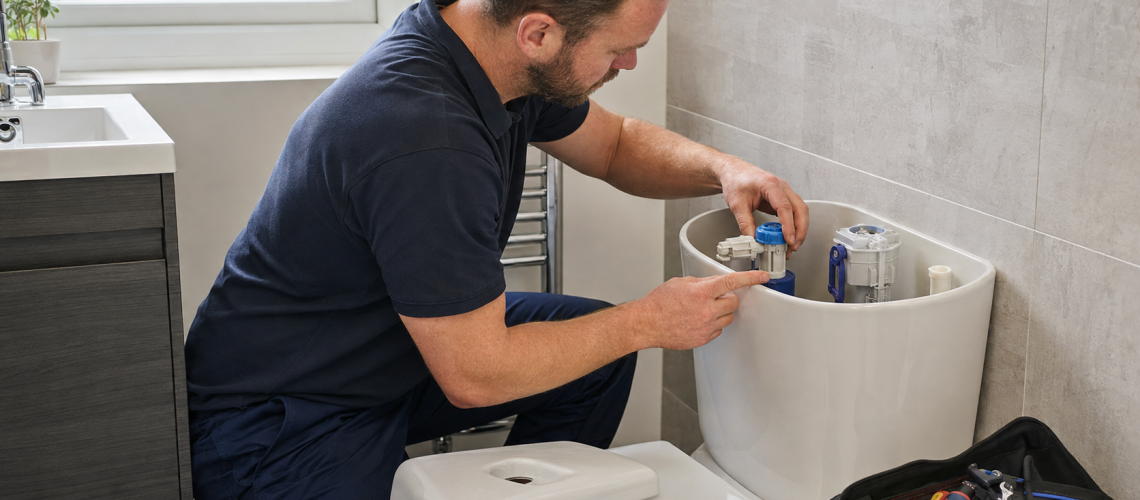
A toilet should refill for a short time after it has been flushed and then fall silent. If you can still hear water running several minutes later, or notice a constant trickle down the back of the toilet pan, something inside the cistern is not working correctly.
It may appear to be a minor irritation, but a running toilet can waste a surprising amount of water. According to Waterwise, a leaking toilet can waste up to 400 litres of water every day.
Here are the most common reasons a toilet keeps running and what you can do about them.
How Does a Toilet Cistern Work?
When you flush the toilet, water leaves the cistern and enters the pan. The fill valve then opens to refill the cistern.
As the water reaches the correct level, a float should cause the fill valve to close. At the same time, the flush valve should reseal the outlet at the bottom of the cistern.
If either valve fails to close properly, water continues flowing. This may create an obvious running sound or a quiet leak that is difficult to notice.
1. The Flush Valve Is Not Sealing Properly
A worn or damaged flush-valve seal is one of the most common causes of a running toilet, particularly on push-button and dual-flush models.
The seal sits at the bottom of the flushing mechanism and prevents water escaping from the cistern into the pan. Over time, it can become:
- Worn or distorted
- Covered with limescale
- Damaged by cleaning chemicals
- Dislodged from its correct position
Even a small gap allows water to trickle continuously into the toilet bowl. As the water level in the cistern falls, the fill valve opens again to replace it, creating a constant cycle.
Replacing the seal or flush valve will usually solve the problem.
2. The Fill Valve Is Faulty
The fill valve controls the supply of fresh water entering the cistern. It should shut off automatically once the water reaches the correct level.
If the valve becomes worn, blocked or damaged, it may fail to close completely. You may hear a persistent hissing or running sound even though the cistern appears full.
In some cases, cleaning or adjusting the valve may help. However, an older or damaged valve will normally need replacing.
3. The Float Is Sticking or Set Too High
The float tells the fill valve when the cistern contains enough water.
If it is sticking against the side of the cistern, incorrectly adjusted or damaged, the valve may continue filling beyond the correct level. The excess water then runs into the overflow and down the back of the toilet pan.
Adjusting the float may correct the water level. If the mechanism is heavily scaled or no longer moves freely, replacement may be the more reliable option.
4. The Flush Button Is Sticking
Sometimes the problem is caused by the flush button rather than the valves themselves.
A button that remains partially depressed can prevent the flush valve from returning to its closed position. On toilets with a cable-operated button, the cable may also become kinked, incorrectly adjusted or damaged.
If the toilet stops running when you lift or gently move the button, the button mechanism or its connection to the flush valve probably needs attention.
5. Limescale or Debris Is Affecting the Mechanism
Hard water can leave mineral deposits on the moving parts and seals inside a toilet cistern. Over time, these deposits can prevent valves from closing properly.
Small particles of dirt or debris can also become trapped beneath a seal, creating a route for water to escape.
Cleaning may resolve a minor problem, but heavily scaled components are often better replaced. This is particularly relevant in hard-water areas across Essex.
How Can You Check Whether Your Toilet Is Leaking?
Not every leaking toilet makes an obvious noise. Water may run silently down the back of the pan.
You can carry out a simple toilet-paper test:
- Wait at least 30 minutes after flushing.
- Wipe the back of the toilet pan dry.
- Place a clean sheet of toilet paper against the back of the pan, above the normal water level.
- Leave the toilet unused for several hours or overnight.
- Check whether the paper has become wet or torn.
If it has, water is probably leaking from the cistern. This method is also recommended by WaterSafe.
Can You Stop the Water Temporarily?
If your toilet is running continuously, it may have a small isolation valve on the supply pipe leading into the cistern.
If the valve is accessible and turns freely, closing it can temporarily stop the cistern from refilling. Do not force an old or seized valve, as this could cause another leak.
This is only a temporary measure. The toilet will need to be inspected and repaired before it can be used normally again.
Can a Running Toilet Increase Your Water Bill?
Yes, particularly if your property has a water meter.
Because much of the water flows quietly into the toilet pan, the leak may continue for weeks without being noticed. A sudden unexplained increase in water use can sometimes be traced to a faulty toilet cistern.
Even if you do not have a meter, repairing the fault prevents unnecessary water waste and stops the components from deteriorating further.
Does the Whole Toilet Need Replacing?
Usually not.
Most running-toilet problems can be repaired by replacing a seal, fill valve, flush valve, float or button mechanism. These components can often be changed without removing the toilet.
Replacing the entire toilet may be worth considering if the ceramic is cracked, replacement parts are unavailable or several parts of an older cistern have failed.
A plumber can inspect the toilet and explain whether repairing or replacing it offers better value.
When Should You Call a Plumber?
Arrange a plumbing repair if:
- Water runs into the pan continuously
- The cistern repeatedly refills when nobody has used the toilet
- The flush button sticks
- The isolation valve does not work
- Water is leaking onto the floor
- The cistern is concealed and difficult to access
- You have replaced a seal but the problem continues
- Your water usage has increased unexpectedly
A slow internal leak may not be an immediate emergency, but it should not be ignored. If water is escaping onto the floor or through a ceiling, isolate the supply if it is safe to do so and contact a plumber promptly.
Toilet Repairs in Grays and the Surrounding Areas
Gasure Plumbing & Heating repairs faulty toilets and cisterns throughout Grays, Thurrock, South Ockendon, Stanford-le-Hope, Upminster and the surrounding Essex area.
Whether your toilet is constantly running, refusing to fill or leaking around the base, we can identify the cause and recommend an appropriate repair.
To arrange a visit, call 07776 153 815 or 01375 405 943.
Frequently Asked Questions
Why does my toilet randomly refill during the night?
This normally means water is slowly leaking from the cistern into the pan. When the water level drops far enough, the fill valve opens briefly to top it back up.
Why does jiggling the flush button stop the toilet running?
The button or flush mechanism is probably not returning to its closed position. Moving the button temporarily allows the valve to reseal, but the underlying fault is likely to return.
Is a constantly running toilet an emergency?
A quiet trickle into the pan is not normally an emergency, although it should be repaired soon. Water leaking onto the floor, into a wall or through a ceiling requires more urgent attention.
Can cistern cleaning blocks cause leaks?
Some cleaning products placed directly in the cistern can affect rubber seals and other components. Always check the toilet manufacturer’s instructions before using them.