
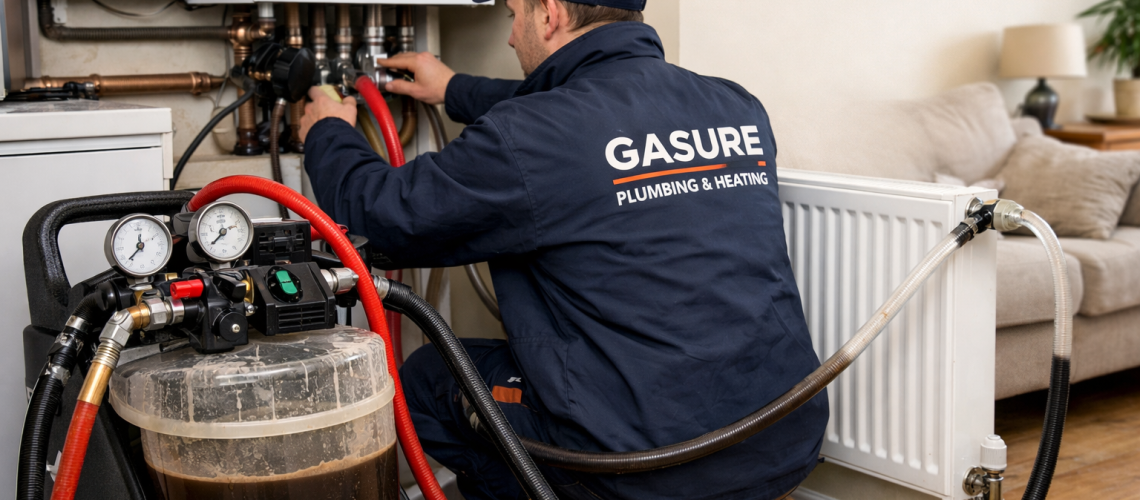
If your radiators are taking longer to heat up, or some rooms never quite feel warm enough, the issue may not be your boiler at all. In many Essex homes, especially older properties, heating systems gradually build up sludge over time.
This hidden problem can quietly reduce efficiency, increase your energy bills, and put unnecessary strain on your boiler. The trouble is, most homeowners do not realise it is happening until performance noticeably drops.
Understanding what heating system sludge is and how to deal with it can make a significant difference to both comfort and running costs.
What is Heating System Sludge
Heating system sludge is a build-up of rust, debris, and dirt that forms inside your central heating system over time.
As water circulates through radiators, pipework, and the boiler, small particles of metal and contaminants accumulate. This eventually settles at the bottom of radiators and within pipework, restricting flow and reducing efficiency.
This is particularly common in older homes across areas like Grays, Upminster, and Thurrock, where systems may not have been properly maintained or protected.
The Problems Sludge Causes
Sludge does more than just slow your heating down. It can lead to several issues that affect your entire system.
You may notice cold spots at the bottom of radiators, even when the top is warm. Some radiators may not heat up at all, while others take far longer than they should.
Your boiler has to work harder to push water through blocked or restricted pipework. Over time, this added strain can lead to breakdowns and costly repairs.
In severe cases, sludge can even damage key components inside the boiler, shortening its lifespan.
Why It is a Common Issue in UK Homes
Many properties in Essex have older heating systems that have been in place for years without proper treatment.
Without inhibitors or regular maintenance, corrosion naturally occurs inside the system. Even newer systems can develop sludge if they are not flushed correctly during installation.
Busy households with high heating demand can also accelerate the build-up, especially during colder months when systems are running constantly.
How to Fix the Problem
The most effective solution for sludge is a professional power flush.
This process uses specialist equipment to clean out the entire heating system, removing built-up debris and restoring proper circulation.
In some cases, a chemical flush may be suitable, depending on the severity of the issue.
Once the system is cleaned, a corrosion inhibitor is added to prevent sludge from forming again. Installing a magnetic filter can also help capture debris before it causes problems.
A qualified heating engineer or Gas Safe engineer can assess the system and recommend the right approach.
Practical Signs to Watch For
There are a few clear signs that your system may be suffering from sludge:
- Radiators with cold spots, especially at the bottom
- Noisy boiler or pipework
- Discoloured water when bleeding radiators
- Slow heating response
- Higher energy bills without obvious reason
If you notice any of these, it is worth getting your system checked before the problem worsens.
Safety and Efficiency Considerations
A poorly performing heating system is not just inconvenient, it can also impact safety and efficiency.
Blocked systems reduce heat output, meaning your boiler runs longer and uses more energy. This increases costs and environmental impact.
More importantly, excessive strain on the boiler can lead to faults or breakdowns, particularly during winter when you rely on heating the most.
Regular servicing and maintenance are essential to keep everything running safely and efficiently.
Seasonal Relevance
Spring and summer are ideal times to deal with sludge issues.
Your heating system is used less during warmer months, making it the perfect opportunity to carry out a flush without disruption. It also ensures your system is ready to perform properly when colder weather returns.
Waiting until winter often means dealing with the problem when you need your heating the most.
Conclusion
Heating system sludge is one of the most common but overlooked causes of poor central heating performance.
Left untreated, it can lead to higher bills, uneven heating, and unnecessary wear on your boiler. The good news is that it can be resolved effectively with the right professional approach.
Gasure Plumbing & Heating regularly helps homeowners across Essex improve their heating systems with expert diagnostics and cleaning. If your radiators are not performing as they should, it may be time to have your system checked.
Do you need a plumber in the South Ockendon area?